

When Google writes your ads… things can get weird.
A recent example? “We Rent Small & Large Dogs.”
Take a look.
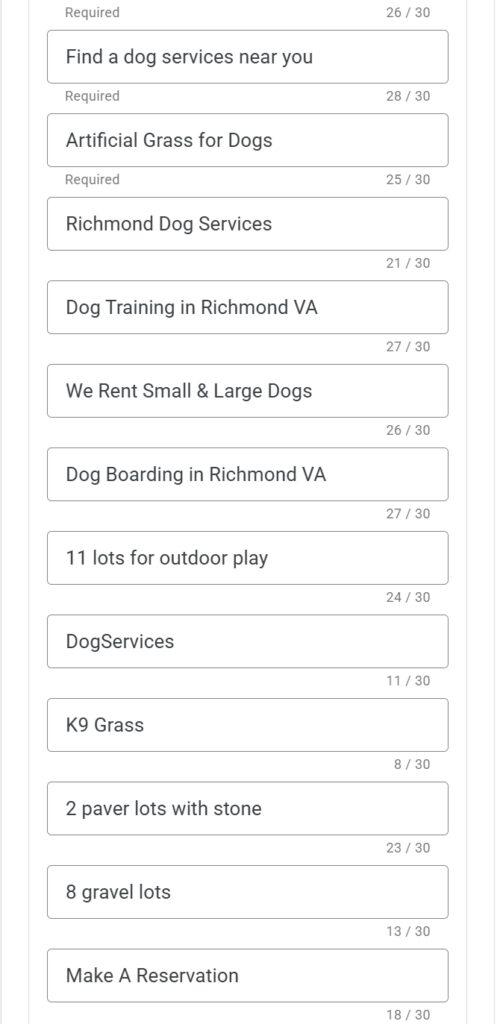
Unless your business specializes in temporary canine leasing (those late fees must be really ruff, right?), that’s probably not the message you want showing up in your ads.
Google Ads has been steadily adding more AI-powered features to campaigns, including a new one that can automatically suggest additional ad headlines and descriptions.
On the surface, that sounds helpful. After all, AI promises speed, efficiency, and the ability to test more variations of ad copy than any human team could reasonably write.
But there’s a catch.
Sometimes the results are… questionable.
AI Suggestions Aren’t the Same as Strategy
Google’s AI tools are designed to maximize engagement and test combinations quickly. They’re great at spotting patterns in data.
What they’re not particularly skilled at — at least not yet — is understanding nuance, brand voice, or the difference between a clever variation and a completely off-base message.
And that’s where things can go sideways.
AI-generated Google ad suggestions can sometimes:
- Misinterpret website content.
- Pull phrases out of context.
- Create awkward or misleading headlines (“2 paver lots with stone” or “8 gravel lots” don’t really scream “pet care,” for example).
- Dilute the messaging that actually converts.
Left unchecked, these recommendations can introduce ads that are confusing, inaccurate, or simply not aligned with your brand.
And when ads run at scale, even minor messaging problems can quickly become expensive ones.
Why Expert Human Oversight Still Matters
One of the most important parts of managing a Google Ads account today isn’t just launching campaigns. It’s reviewing and scrutinizing the constant stream of recommendations Google pushes into those accounts.
These suggestions are often presented as improvements, but they aren’t always in the advertiser’s best interest.
Sometimes they’re useful.
Sometimes they’re harmless.
And sometimes they come up with bizarro headlines about renting dogs.
At IMPACT, reviewing these automated recommendations is a routine part of how we manage campaigns.
Our team:
- Meticulously reviews AI-generated ad suggestions before they go live.
- Removes copy that doesn’t align with your business’s messaging.
- Refines headlines and descriptions for clarity and relevance.
- Tests variations that actually reflect how customers search and make decisions.
In other words, we treat Google’s suggestions as ideas to evaluate — not instructions to follow.
The Goal Shouldn’t Be More Ads, But Better Ads
Automation can be incredibly helpful when it’s guided by strategy. But when left entirely on autopilot, it can also introduce noise, confusion, and wasted spend.
The goal of a well-managed Google Ads campaign should never be to simply generate variation upon variation of ad copy. Your goal should be to deliver the right message to the right audience at the right moment — clearly, accurately, and in a way that reflects your brand and expertise.
Scrutiny still requires human judgment.
The Bottom Line
AI tools inside advertising platforms are evolving at inconceivable speeds, and they can absolutely play a role in modern campaigns.
But they’re still just tools. You’re the decision-makers.
Smart advertisers know the difference between automation that helps and automation that needs a careful second look.
At IMPACT, that process is part of the job.
Because while AI can generate ad copy in seconds, making sure it actually makes sense—and most importantly, works—is still best left to humans.
(Though we hear there’s a great place to rent some schnauzers for light proofreading.)