
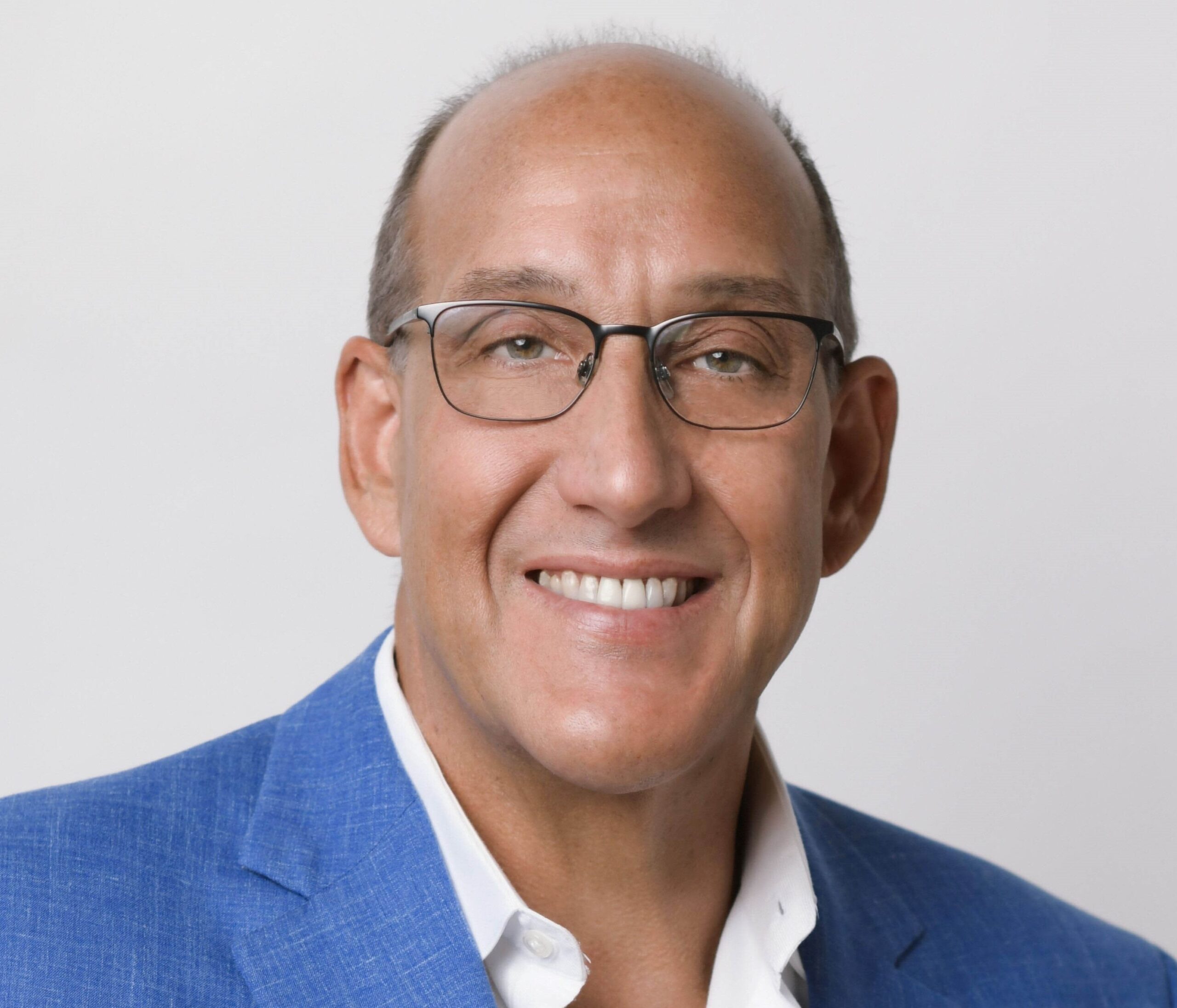
For a former aspiring actor, Drew McManigle talks a lot about dancing.
Every recollection, every anecdote is dotted with the word: dance. In Drew’s world, it’s shorthand for the negotiations and deal-making that take place between lawyers, judges, creditors, executives, and other power players—high-stakes choreography that unfolds from the oil fields to the executive offices in Houston to boardrooms across the country.
The lingo is second nature for the award-winning CEO of MACCO Group, a national advisory firm specializing in operational turnarounds and crisis management for distressed companies.
“I remember I briefly danced with this guy in New York,” he recalls.
“One of the first things he gave me was a 15- or 16-page document of what consultants should look at when they begin an engagement. It was single-spaced—50 or 60 items on there. When I looked at it, I realized that 99.44 percent of it was bulls**t when it came to a company that was in trouble. Why do I care about your last three years’ tax returns? I couldn’t care less.”
What it did do, however, was cement a truth in Drew’s mind: much of the traditional consulting model was little more than a billing exercise. When he eventually founded MACCO, he wanted the firm to be the opposite, the antithesis.
“And we are,” he says. “If we can find the solution for the client in fifteen minutes, we’ll happily bill them for fifteen minutes, shake hands, take the check, and go home. If it takes longer, it takes longer. But we’re not going to spend time on things that make no difference to fixing a broken company.”
Drew also talks a lot about fires—specifically, putting them out.
For more than three decades, his career has centered on rescuing companies in financial distress, stepping into situations where time is short, money is tight, and the stakes are high.
MACCO often describes its team as “business firefighters”—and the analogy isn’t accidental.
Drew grew up in West Texas, in the heart of the oil industry—an environment where both fortunes and disasters could be engulfed overnight.
In the Red
Standing at 6-foot-5, Drew cuts an imposing figure. It’s a presence that served him well in boardrooms later in life—but early on it landed him a very different role.
“I’m a big guy,” he says. “I’ve always been a big kid. From the time I was in kindergarten, I always got to play Santa Claus in school plays.”
“I liked it. I liked the attention. I think I had a little bit of a facility and a personality for it.”
In hindsight, the role was foreshadowing. Drew was playing the benevolent problem-solver—the man who shows up when something is needed and leaves things a little better than he found them.
What he didn’t know at the time was that the path from Santa Claus to corporate rescuer would take him through oil busts, bankruptcy courts, Italian movie locations, and eventually the founding of a national restructuring firm.
Drew grew up in Odessa, Texas, in the heart of the Permian Basin—one of the most prolific oil-producing regions in the world.
“In the mid 50’s, my dad who had been involved in the oil and gas business, tried to drill a few oil wells down in West Texas, and they were dry. He didn’t know at the time that he was only about 4,000 feet too shallow,” Drew laughs. “One of the most prolific fields or formations—the Ellenburger—starts around 8,000 feet or so. If he had just drilled a little deeper, I’d be on my yacht in Monaco right now!”
Instead, Drew’s dad started an oilfield services company—Devonian Well Service—and like many families in West Texas, the industry shaped everything.
“I came along in 1956 when my parents were 40, which was unheard of. I had two brothers who were 16 and 14 years older than me,” Drew says. (His brother Dick would go on to become mayor of Odessa in the late 70s.)
By all accounts, Devonian was a typical family-owned business, Drew says. He was 12 when his father died, a loss that left him with a great deal of autonomy at a young age. He later attended Odessa Permian—the famed “Friday Night Lights” high school—where life otherwise felt fairly typical.
“I grew up a country club kid,” he says. “We weren’t somebody, but we weren’t nobody, either.”
When the oil boom of the late 1970s was roaring, business was good.
Then the bottom fell out.
With the dawn of the 80s, the McManigle family business drama intensified. Drew ended up buying out both brothers’ shares of Devonian in a tax-free exchange—equipment for ownership.
“I thought it was just a great idea,” he says. “But my timing sucked. We had been blowing and going and doing just fine because of the boom that started in the late 70s. But then it started falling off. And when it fell off, it did so pretty precipitously.”
“Prices kept falling. Rig rates kept falling,” he recalls. “It was horrendous.”
After the National Bank of Odessa was closed in 1983 by the FDIC, Devonian filed for Chapter 11 when Drew was in his mid-20s. He helped to liquidate it, gaining extensive knowledge of financial consulting, bankruptcy, creditors’ rights, and more.
“Nothing was left. It was the end of Devonian Well Service as we had known it,” he says.
But even as the family company collapsed, another opportunity was already taking shape.
The Green Room
Though he didn’t realize it at the time, surviving the end of Devonian had equipped Drew with a unique perspective—and precisely the kind of experience distressed businesses needed.
The oil industry was in ruins, banks were failing across Texas, and there was little demand for former presidents of oilfield services companies. It was, in a word, “apocalyptic.”
“I had just enough money in my pocket to make one last trip to Houston,” Drew says. He went there to figure out what came next.
Over coffee one morning, his bankruptcy attorney, notable Houston lawyer Harry Perrin, asked a simple question:
“What now?”
Perrin had noticed something unusual during Devonian’s bankruptcy proceedings. Drew had actually purchased a bankruptcy code, read it, and was often calling with questions about how the process worked.
Harry had an idea.
“He said, ‘Look, everyone at the firm knows you. We’re spending a lot of time on our clients’ business problems versus practicing law, and that’s not very efficient for us… But you get it. You’ve been there. You’ve done that.’”
Perrin warned him about one thing. The job wouldn’t pay s**t. But it would be a fresh start. An education. With the promise of a nice office—and the reassurance he could still wear his custom-made suits—Drew accepted.
“It sounded like the greatest idea in the world to me at the time,” he says.
It was.
“I got to know everybody who was anybody in Houston, and in some cases around the country, when it came to bankruptcies, turnarounds, and workouts.”
At the time, the modern turnaround industry barely existed. Firms like AlixPartners were just beginning to get their feet wet, and the Turnaround Management Association was in its infancy. Most restructuring work was still handled by lawyers and accountants.
Drew had landed smack-dab in the center of an emerging ecosystem.
Learning His Lines
Over the next several years, while at the law firm, Drew began taking on increasingly complex business matters while working closely with the firm’s lawyers, serving as an adjunct business advisor to the firm’s clients in financial distress. Along the way, he also saw firsthand how many traditional consulting firms operated—large teams, lengthy analyses, and billing structures that rewarded time spent rather than problems solved.
Those experiences began shaping Drew’s philosophy of what a restructuring firm could and should look like: smaller teams, experienced operators, and a relentless focus on solving the problem in front of them.
By the early 1990s, Drew was at a crossroads, of sorts. He could go back to school and become a lawyer—or build something of his own.
I said, “Hell, I’ve run companies. I’ve worked within a bankruptcy law firm. I know everyone in town. And I’ve got a pretty good reputation.”
He opened his own restructuring shop in 1993.
The ink on his business cards had hardly dried when Drew attended a conference and struck up conversations with acquaintances and colleagues who were thrilled to encounter a familiar dance partner.
Within weeks, The McManigle Company received its first referral.
“The next thing I knew, I was the financial advisor to the Chapter 7 trustee in the El Paso Refinery bankruptcy case.”
The Good, The Bad, and The Ugly
Drew says he stayed on his own as a “single guy” for a few reasons – not the least of which was his refusal to argue about money.
“I had been around at the beginning of the industry,” he explains. “I’d been exposed to prominent people and prominent firms. I had watched the business turnaround practices at Price Waterhouse and Coopers and Lybrand take form and take shape. I watched as they merged and the entire restructuring group was spun off into what is now FTI Consulting. I knew all of those folks. And having watched them, I saw and heard the good, the bad, and the ugly. I just thought, ‘I don’t want any part of that.’”
In the late 1990s, Drew took on one of the most challenging assignments of his early career when he was appointed Chapter 11 trustee for an opiate and non-opiate producing pharmaceutical company that had been languishing in bankruptcy for more than three years.
That case, pending before Chief Judge Burton Lifland in New York, required him to displace management and stabilize a struggling operation.
“It was an unbelievable challenge to keep our DEA licenses active, keep the manufacturing business alive and try to sell it…all at the same time,” he says. “But we were eventually successful.”
Around the same time, Drew met Sharon, his future wife of 28 years, and her two young children Vince and Tanya. Settled in New Jersey, he continued building his restructuring practice based in New York City through the late 1990s and early 2000s.
Like most independent advisors in the field, the work came in waves—periods of intense activity followed by quieter stretches spent maintaining relationships and staying visible within the tight-knit restructuring community.
In 2003, Drew briefly stepped away from advisory work for a new dance with a Fortune 500 healthcare company DaVita.
“I had more than a rudimentary knowledge of healthcare, and of course, I’d been in the pharmaceutical business,” Drew says. “They moved us on a full boat deal all the way to Columbia, Maryland.”
At DaVita, Drew managed regional operations and expansion of dialysis centers in Baltimore. But when the company announced a massive acquisition of competitor Gambro Healthcare, Drew had a troubling feeling the landscape was about to change.
“There was a little piece in The Wall Street Journal that said, ‘DaVita Announces the $3-Billion Cash Acquisition of its Next Largest Competitor Gambro Healthcare,’” Drew remembers. “And A) none of us knew about it, and B) I was now in my mid-40s and had been involved in business for a long time. I thought, ‘F**k, this is going to be great or it’s going to be a nightmare, and not much in between.’”
“I told Sharon, ‘I don’t feel good about this place. You might want to break out the old McManigle Company propaganda.’”
Within a year, Drew returned to independent restructuring work, taking on distressed-company leadership roles across the country. Over the next decade he continued advising troubled businesses, while quietly watching another industry cycle take shape.
“Finding work is always challenging, because in this business it comes from bankruptcy lawyers, corporate lawyers and other business types – you kind of have to be top of mind and constantly hustling and trying to keep your name out there,” he says.
The early 2010s saw another oil and gas boom, fueled by private equity and new drilling technologies. It was rapidly expanding—and barreling toward a correction.
“I thought, ‘This isn’t sustainable,’” Drew recalls. “‘I’ve seen this movie before.’ It had grown so fast. Private equity was pouring billions of dollars into it. Eagle Ford and South Texas Shale were in play. Horizontal drilling and fracking and all this stuff was booming.”
Drew could see the cracks forming, and fast.
“I said, ‘This is not going to last.’”
That conviction ultimately led him back to Houston. Following a brief “dance” with a West Coast consulting firm, he and Sharon decided it was high time to build something of their own.
A few phone calls later, Drew was back in the business of putting out fires.
MACCO Restructuring Group was born.
Ready for a Close Up
Oil and gas. Hollywood. Turnaround and restructuring. The path that ultimately led Drew to founding MACCO is dotted with unique stops—industries defined by power, wealth, and occasionally redemption.
But back to the movies for a moment: in his early twenties, while still in college, a classmate—Jim J. Bullock (yes, that JM J. Bullock)—encouraged Drew to audition for the Lee Strasberg Institute. A brief detour to Los Angeles followed, along with a strange twist of fate: a small role as a day player in the James Bond film Moonraker. Drew had one line and later found himself sharing martinis by the pool with Roger Moore in Venice. (A story for another time, perhaps.)
The acting career didn’t stick. But the experience did prepare him for a different kind of stage, one where he would eventually speak to thousands of restructuring professionals at industry conferences.
Incidentally, Drew’s first film role was as an assistant to Q—Bond’s purveyor of gadgets, last-minute solutions, and high-tech Hail Marys. Like his earliest stage role as Santa, Drew’s brief moment of cinematic fame cast him as a fixer of sorts.
A problem-solver.
That, Drew says, is exactly what MACCO does.
“We work with companies and organizations that are experiencing some type of financial or operational distress. That can be because they borrowed too much money. It can be because their product went bad. It may be because they had an accident at their plant and a big judgment was awarded against them. It can happen because of bad management, bad acquisitions, or acquisitions that didn’t go as well as people thought they might.”
When businesses are burning, MACCO’s financial and operational experts step in to assess the damage, contain the crisis, and execute a plan to stabilize the company.
They give businesses in the midst of turmoil a way forward.
The Houston-based firm now includes managing directors on both coasts and a growing team that has earned recognition from organizations such as the American Bankruptcy Institute and the M&A Advisor Awards—success built in no small part on Drew’s reputation and longevity in the restructuring trenches.
“I think I’m pretty personable,” he says. “I’m just a no bullshit kind of guy. And that’s how we run the firm.”
“I’m known for my plain speaking,” Drew continues. “When we go to a client, we assess the situation and look at what we believe can realistically be done—and what the potential outcomes are. We don’t sit there and make pie-in-the-sky promises we can’t keep. If something looks DOA, we’ll tell you. We’ll say, ‘We’re sorry, but we don’t think this can be fixed—and here are your options.’ What we don’t do is give people false hope. That’s who we are—painfully transparent, clear, and candid with our clients, and with ourselves.”
For Drew, the work still carries a certain thrill—an adrenaline rush not entirely unlike leaping from a plane without a parachute or descending chimneys in a single bound.
“You never know when the next engagement is going to show up or what it’s going to be. You never know what kind of characters are going to be involved, and let me tell you, I’ve met plenty of characters in this business. The problems are challenging. You get to work with a lot of people, some of whom you form really close bonds with. Most importantly, if you do it the right way, you can get a better result than what would have happened if you had not been there. And that keeps you going.”
Drew now shares many of those stories on his Reviving Giants podcast, where he speaks with restructuring professionals about how companies collapse, recover, and sometimes rise again.
In Drew McManigle’s world, the next act—or the next fire—is always just around the corner.